
The Vikings
MLM: Motorcycle Loving Men
by Fiona Charlson

"Dave Even and Carl Banks," 1968. Photographer unknown. Scott Erickson Collection.
Queer History Boston.
It was a cold night in February of 1969, but leather kept curious men warm as they made their way past Symphony Hall to The Shed Bar on Huntington Avenue in Boston [1].
The Cycle MC leather club from New York City was holding a bar night and invited local gay men to learn about their club. Those who were there that night saw the invaluable bond between members and were inspired to create a club of their own. Within a few weeks of meeting The Cycle MC, a group of men in Boston organized an informal event on February 22. On March 1, 1969, the first official meeting took place and the Vikings MC was founded, becoming the first motorcycle club for gay and bisexual men in Boston, and among the few in the country [2].
If you are enjoying this mini deep-dive of local LGBTQ+ history, please consider donating to Queer History Boston!
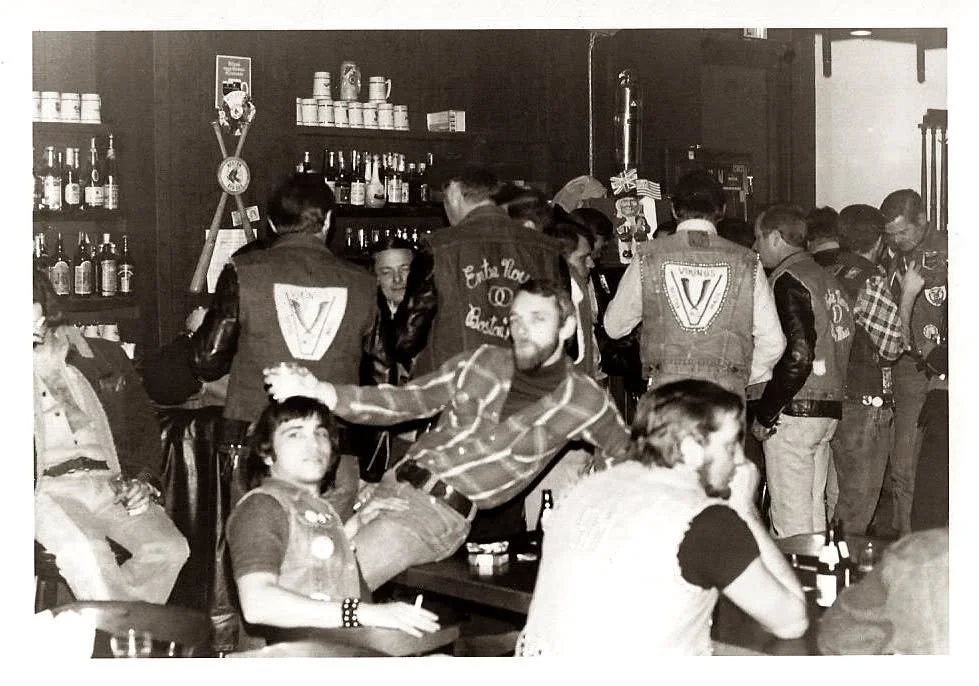
Bobby Soddaholm and Walter Barnaby at Herbie’s Ramrod Room / 12 Carver Bar. Ca. 1972. Scott Erickson, Facebook, March 10, 2025.
The Vikings Motorcycle Club
As one of the first Motorcycle Clubs for queer men, The Vikings helped found the Atlantic Motorcycle Coordinating Council (AMCC). Created the same year as the Vikings, the AMCC brought together five motorcycle clubs for gay and bisexual men from across the country, eventually expanding to include members from the U.K. and Canada [3]. Not only did The Vikings help lay the foundation for gay motorcycle clubs, but they also made history through their early leadership in national and worldwide spheres.
The club’s first president, George Suprenant, took the name of ‘Odin’, who, in Norse mythology is the ‘AllFather’ or ‘Chief God’ [4]. This began a tradition of presidents of VMC taking on names of figures from the Norse Pantheon [5].
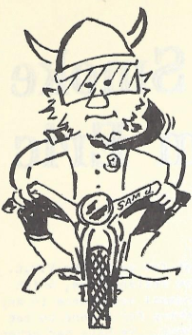
VMC Longship Vol 3 Issue 4. Cartoon
Staying in theme, The VMC published a newsletter called The Longship. Released roughly once-a-month, the newsletter featured dates and times of meetings, when payment was due, and any events the VMC were a part of. Other members created games and wrote music and poetry.
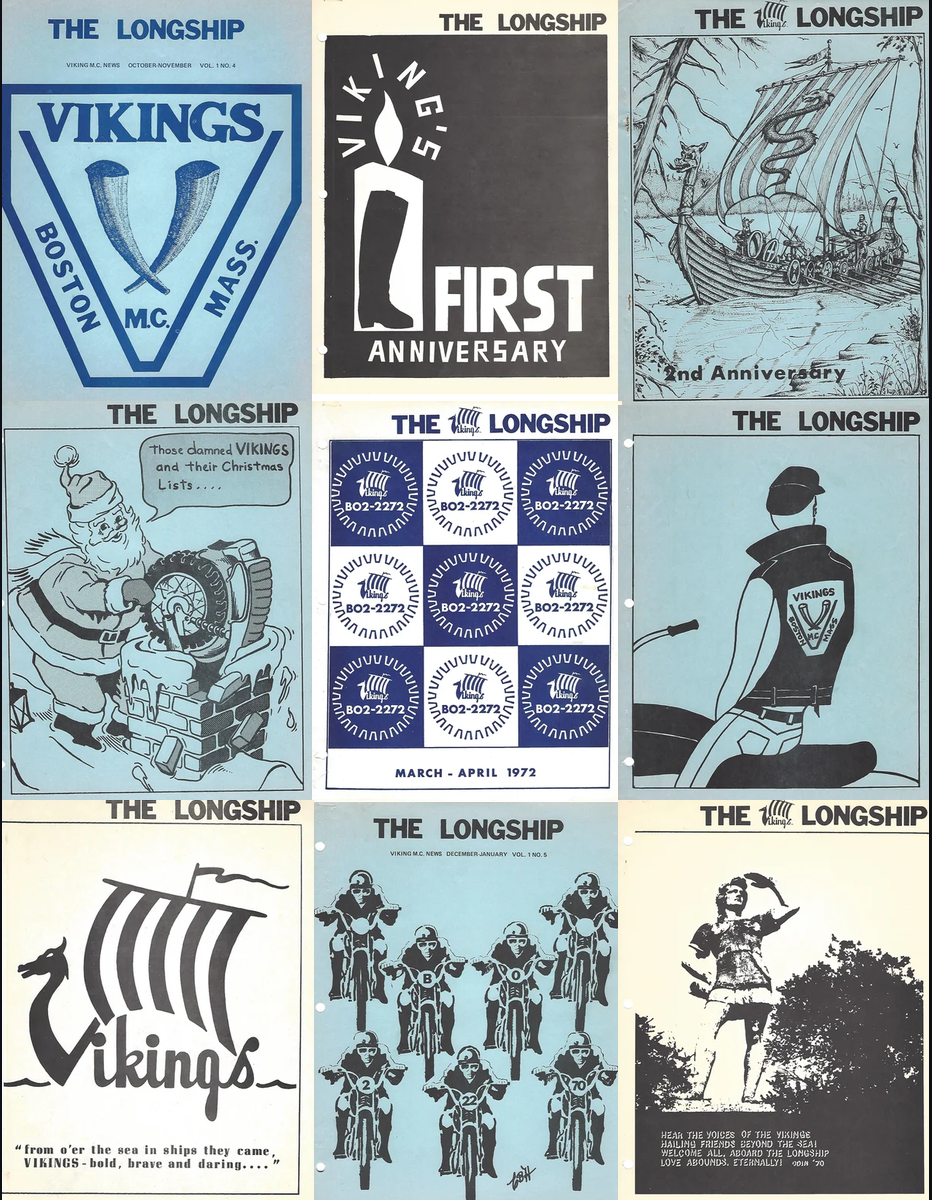
The Longship Front Cover Grid. Courtesy of Empire City Motorcycle Club Archives. Left-right, top-down:
VMC Longship Vol 1 Issue 2; VMC Longship Vol 1 Issue 6; VMC Longship Vol 2 Issue 5; VMC Longship Vol 2 Issue 3; VMC Longship Vol 3 Issue 3; VMC Longship Vol 2 Issue 4; VMC Longship Vol 4 Issue 2; VMC Longship Vol 1 Issue 5; VMC Longship Vol 3 Issue 4.
Some even submitted drawings and pictures. In the ‘Letters to the Editor’ section, riders shared their experiences, thankfulness, or qualms with the club [6]. This section made the newsletter very personal and more like a scrap book of memories that built trust and camaraderie between members.
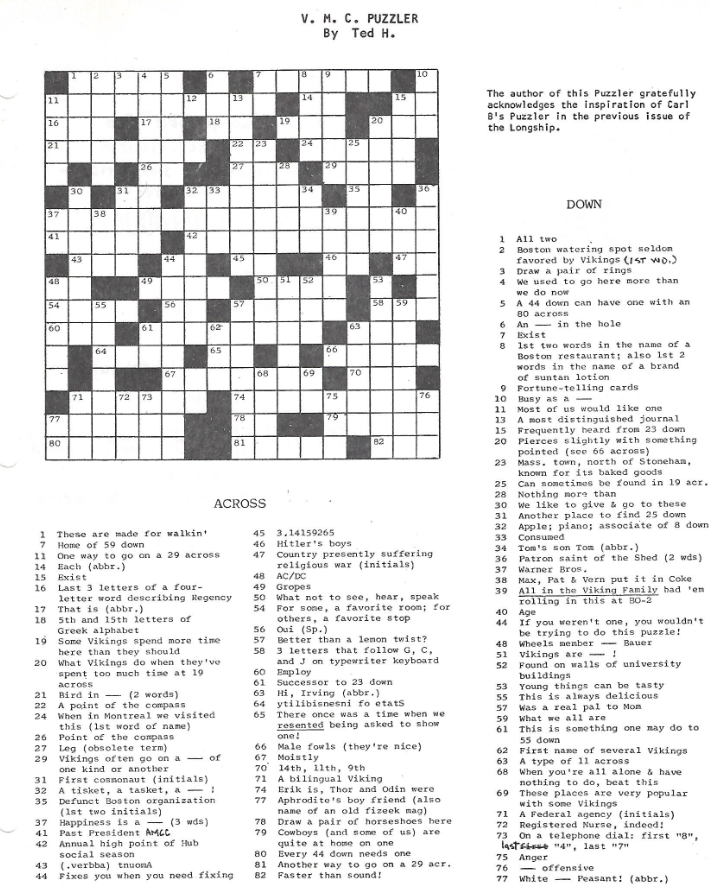
V.M.C. Puzzler by Ted H. VMC Longship Vol 3 Issue 3. p. 23. Courtesy of Empire City Motorcycle Club Archives.
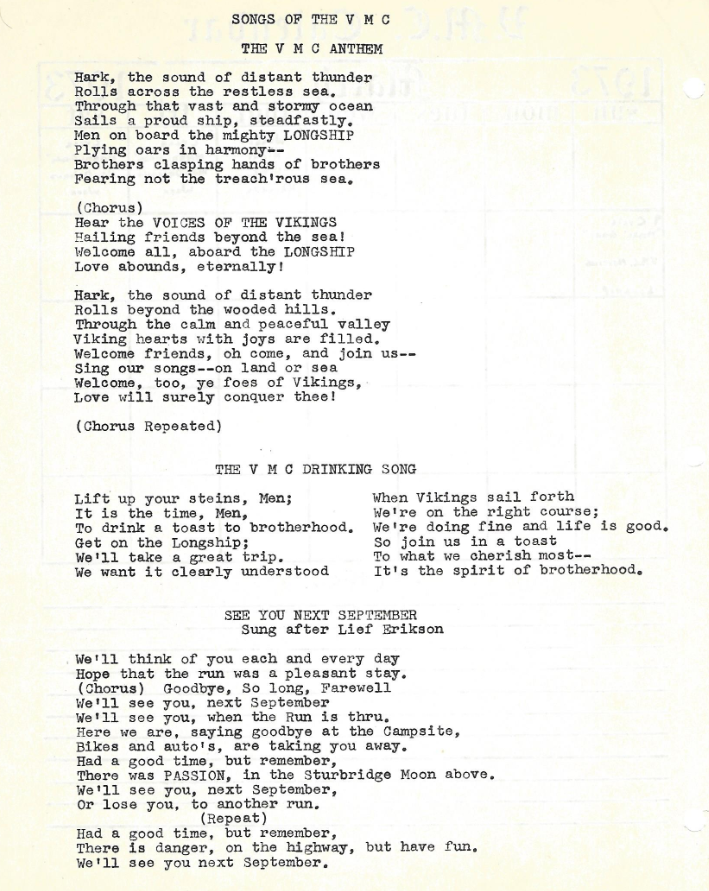
"Songs of the VMC." The Longship Vol 4 Issue 2. p. 7. Courtesy of Empire City Motorcycle Club Archives.
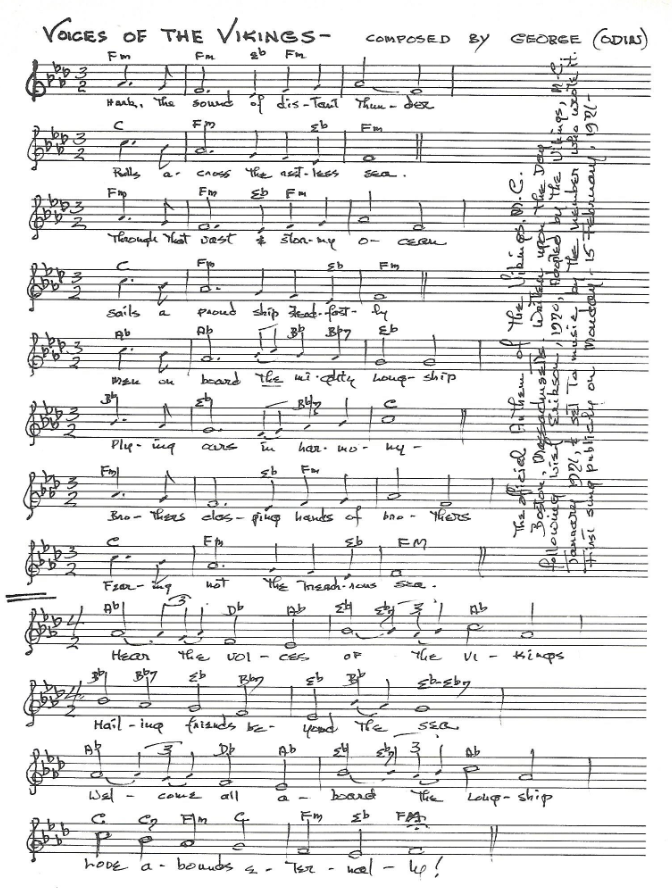
George (Odin), Suprenant. "Voices of the Vikings." VMC Longship Vol 2 Issue 5. p.5. Courtesy of Empire City Motorcycle Club Archives.
Community Involvement

In addition to the newsletter, VMC held two biannual events and participated in many others around the country. BO2, later called BO2-2269, was VMC’s anniversary ride. It was named after VMC’s founding date: February 22, 1969 [7]. The subsequent rides/runs were named for the year in which they took place.
Over Labor Day Weekend, VMC hosted the ‘Leif Erickson’ Run. VMC members along with other motorcycle clubs would cruise around Boston Harbor and party [8]. Described by Woody B. in The Longship, a “run is a happening where bike enthusiasts get together…[and] can get their enjoy[ment] in the company of like-minded guys who want a chance to be themselves - their real selves without the shame that society has imposed” [9]. At the conclusion of the weekend, VMC passed out trophies to celebrate gay, leather, and motorcycle cultures.
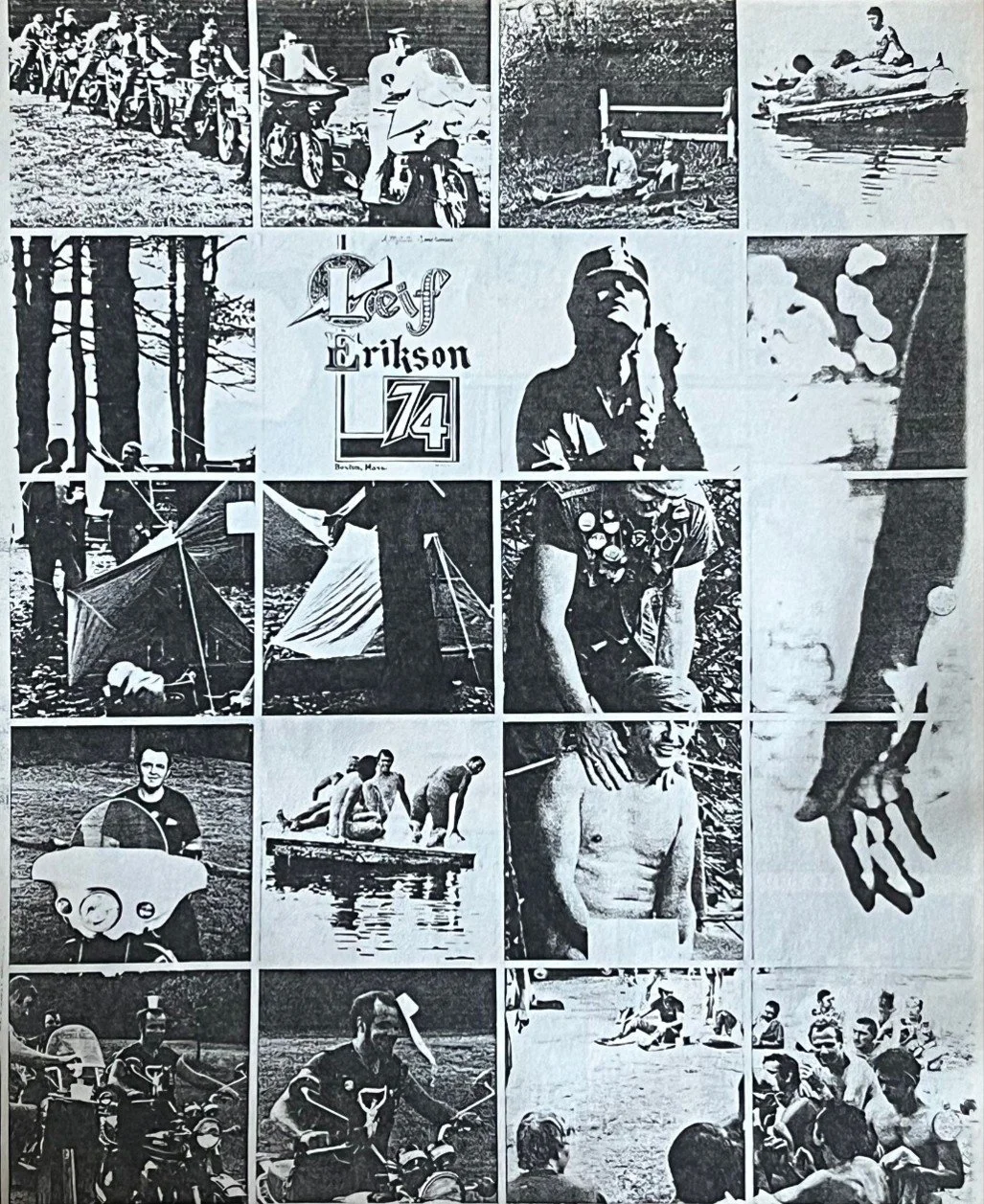
"Leaf Erickson 74." Scott Erickson Collection. Queer History Boston.
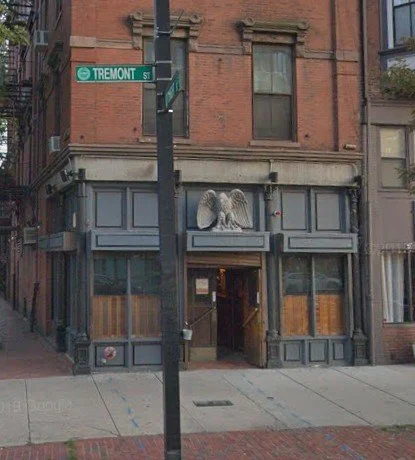
514 Tremont St. Boston, The Eagle Bar, Google Maps, September 2018.
Over the next 25 years, the club remained a prominent riding group for queer men in the greater Boston area. Club meeting minutes from The Vikings and AMCC suggest that the VMC disbanded sometime between 1995 and 1997. The Boston Eagle Bar, known colloquially as the 'The Dirty Bird,” was a meeting spot for many local motorcycle clubs, VMC made the Bar its headquarters for the club’s last five years [10].
While these clubs are called Motorcycle clubs or leather clubs, they function like social clubs where people can come together with or without bikes or a lot of leather. Through membership in these appearingly ‘rough’ clubs, Kate Wilson explains, in her article Keeping the Ride Alive: The long legacy of LGBT MC’s, queer men become “cloaked behind the hypermasculine veneer of the biker image, [and thus are] free to live brazenly on the outskirts of society, not as outcasts, but as rebels” on their own terms [11]. LGBTQ+ leather and motorcycle clubs were founded to help foster community, camaraderie, and safety among queer men who are often ostracized in mainstream groups; making LGBTQ+ motorcycle clubs some of the oldest queer organizations in the country [12].
The Vikings Motorcycle Club continues to inspire the formation of motorcycle clubs for LGBTQ+ individuals across the country. VMC created spaces where queer men could unapologetically be themselves without hiding their sexuality, gender expression, and passion for motorcycles. David Ez, in his pledge for membership, described how there was an “emotional bond of fellowship among members” that he could not miss the opportunity to be a part of [13].
In a letter from Vol.1 No. 5 of The Longship, Odin concludes that “happiness is wearing diesel oil when everyone else is wearing baby oil with iodine in it” [14].
Our thanks to leather historian Scott Erickson for his guidance and work preserving Boston’s leather history!
Enjoyed this glimpse into Boston's LGBTQ+ history?
Come visit Queer History Boston and see what stories you can bring out of the archives!
Notes
The Boston Eagle at 520 Tremont Street, Boston. History of the Vikings MC At the Boston Eagle. P.2.
“Home Page.” Atlantic Motorcycle Coordinating Council, Accessed 7/7/2026.
The Longship, Vol. 1. No. 1. Courtesy of Empire City Motorcycle Club Archives.
Woody B. “Gleamings from a run planners think tank.” VMC Longship Vol 2 Issue 8. P.3.
Kate Wilson. Keeping the ride alive: The long legacy of LGBT MCs. Revzilla. Jun 15, 2022.
David Ez. Pledge for Membership letter. July 24, 1971. VMC Longship Vol 2 Issue 8.pdf P.8.
George (Odin), Suprenant. VMC Longship Vol 1 Issue 5.pdf p. 7.
Bibliography
The Boston Eagle at 520 Tremont Street, Boston. History of The Vikings MC At the Boston Eagle. Empire City Archives. P.2.
Clampitt, Cynthia. “Odin (deity).” EBSCO. 2022.
Erickson, Scott. Email Correspondence. Jun 30, 2026 and July 1, 2026.
Ez, David. Pledge for Membership letter. July 24, 1971. P.7. VMC Longship Vol 2 Issue 8.pdf
“Home Page.” Atlantic Motorcycle Coordinating Council, Accessed 7/7/2026.
Suprenant (Odin), George. p. 7. VMC Longship Vol 1 Issue 5.pdf
Wilson, Kate. Keeping the ride alive: The long legacy of LGBT MCs. Revzilla. Jun 15, 2022.
Woody B. “Gleamings from a run planners think tank.” 3 17 VMC Longship Vol 2 Issue
