Project 10 East
New England’s First Gay-Straight Alliance
by Toni Armstrong
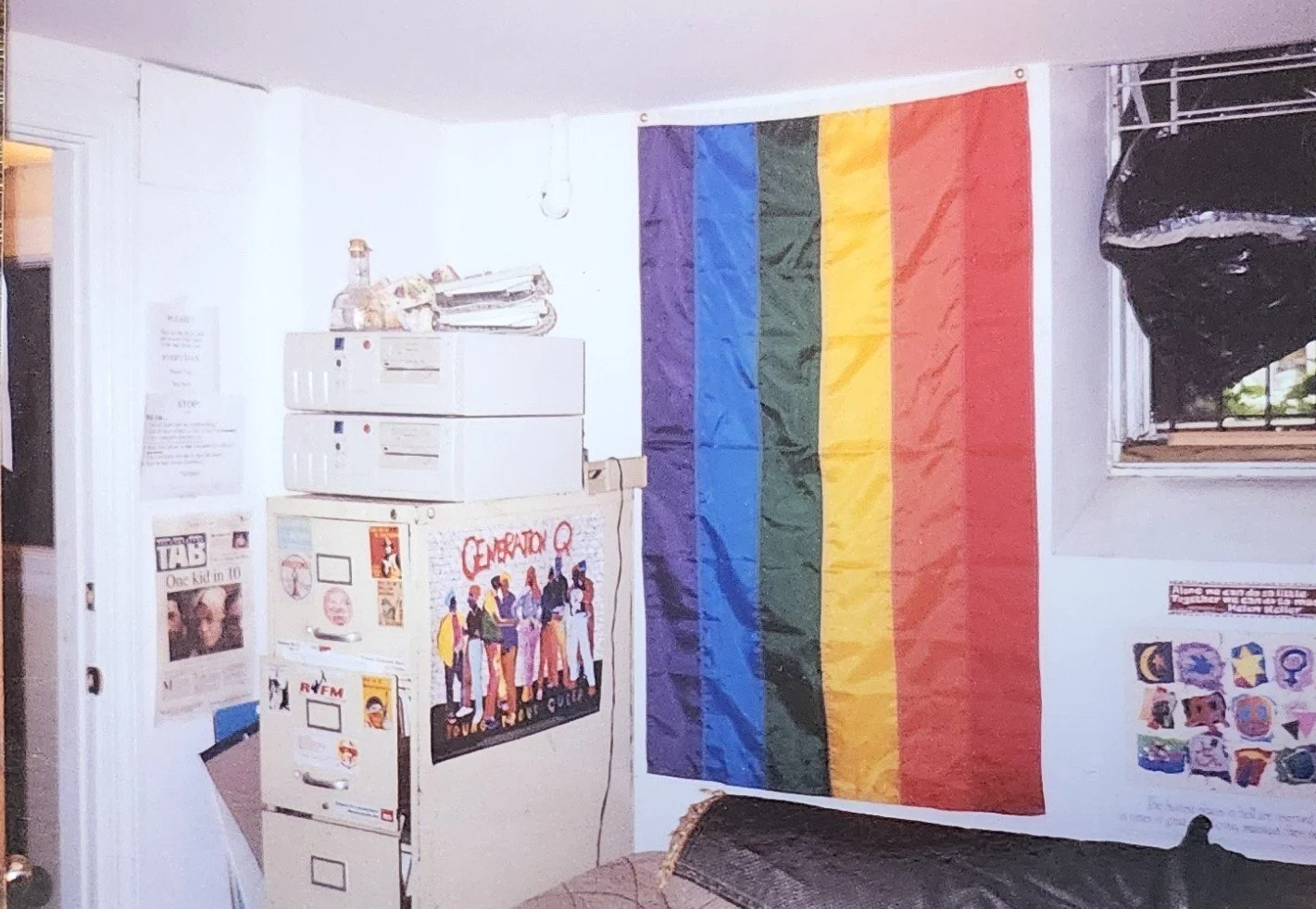
A view inside the Cambridge Rindge and Latin School Gay-Straight Alliance meeting room, not dated (likely c. 1995-1999). Queer History Boston, Coll. 028 - Project 10 East, Photo Album 4.
Did you know the first Gay-Straight Alliance in New England was founded at the Cambridge Rindge and Latin School?
Gay-Straight Alliances began with the founding of Project 10 at a high school in Los Angeles in 1984. The first Gay-Straight Alliances (GSA) were designed to be safe spaces for high schoolers to find community, to fight bullying, and to educate themselves, their peers, and the adults in their lives. In 1988, Cambridge Rindge and Latin School (CRLS) photography teacher Al Ferreira took inspiration from the original Project 10 and founded CRLS’ own Gay-Straight Alliance, called Project 10 East. In the following years, Ferreira also created Project 10 East, Inc., an organization that helped other high schools in New England open their own GSAs.
If you are enjoying this mini deep-dive of local LGBTQ+ history, please consider donating to Queer History Boston!
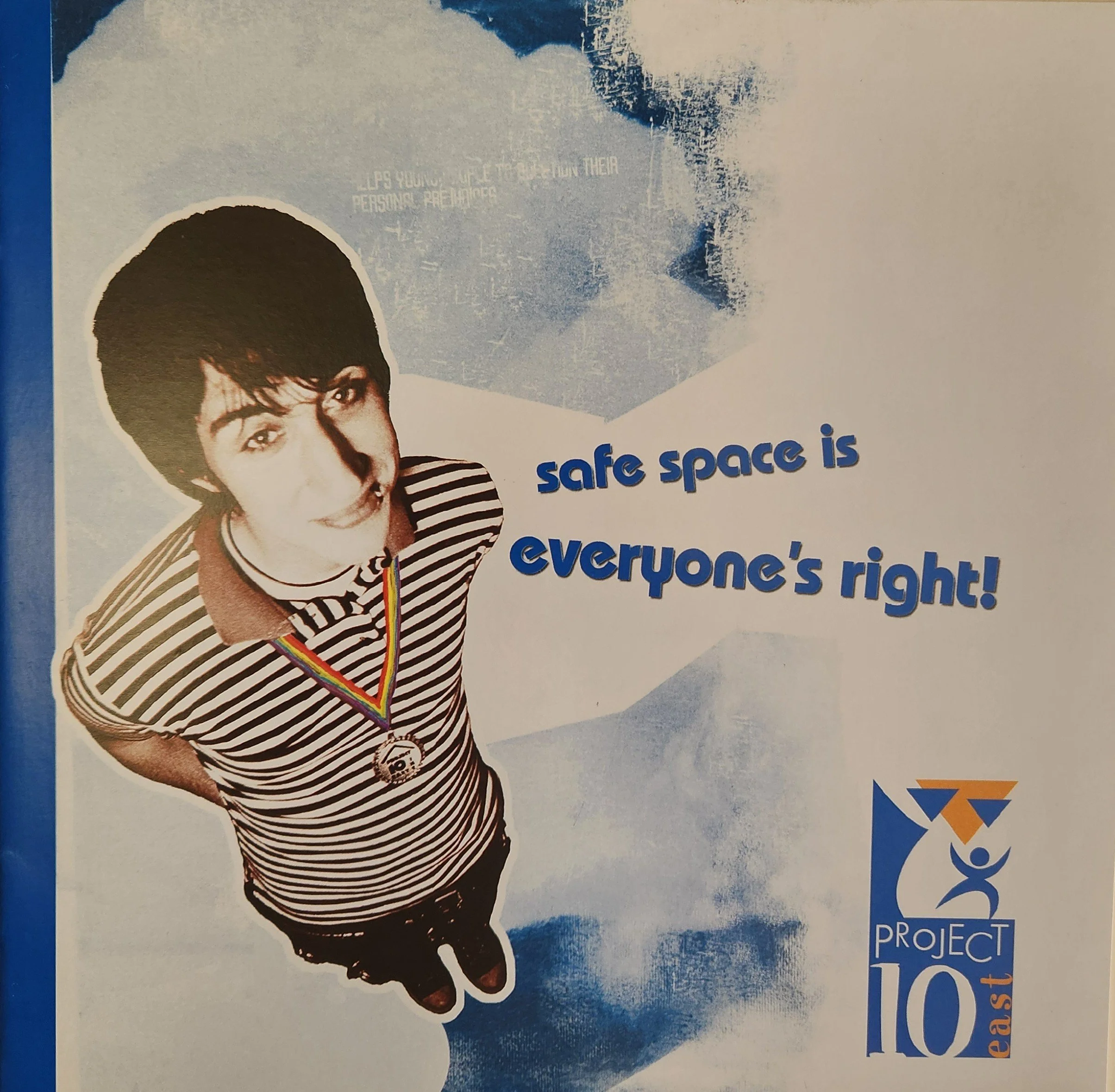
This brochure described the goals of Project 10 East, Inc., to prospective donors and schools in need of support founding their own GSAs. Queer History Boston, Coll. 028 - Project 10 East, Folder 36.
Saving Lives - The First Gay-Straight Alliance in Los Angeles
In a 1999 article, Project 10 founder Virginia Uribe describes the the mission of the first gay-straight alliance as: “education, reduction of verbal and physical abuse, suicide prevention, and dissemination of accurate AIDS information.”[1] She cites the United States Department of Health and Human Services report on teen suicide, which warned that almost 30% of teen suicides at the time were related to conflicts over their queer identities. The urge to protect students by providing safe spaces, fighting bullying, and spreading knowledge was similar on the other coast.
Here in Cambridge, Al Ferreira was motivated to come out publicly as gay in a large school assembly after the loss of one of his former students. In an interview later, Ferreira said:
I came out in front of three hundred teachers at a workshop on homophobia. I told them that I had been hurt by their insensitive comments, and that I wanted them to change their way of speaking. I said that I didn’t want to be hurt anymore, and I didn’t want them being callous and insensitive in front of students.[2]
After coming out, Ferreira began to develop the new Gay-Straight Alliance. Like the original Project 10 in Los Angeles, Project 10 East would prioritize education and community-building through workshops, events, and support groups for students, teachers, and parents.
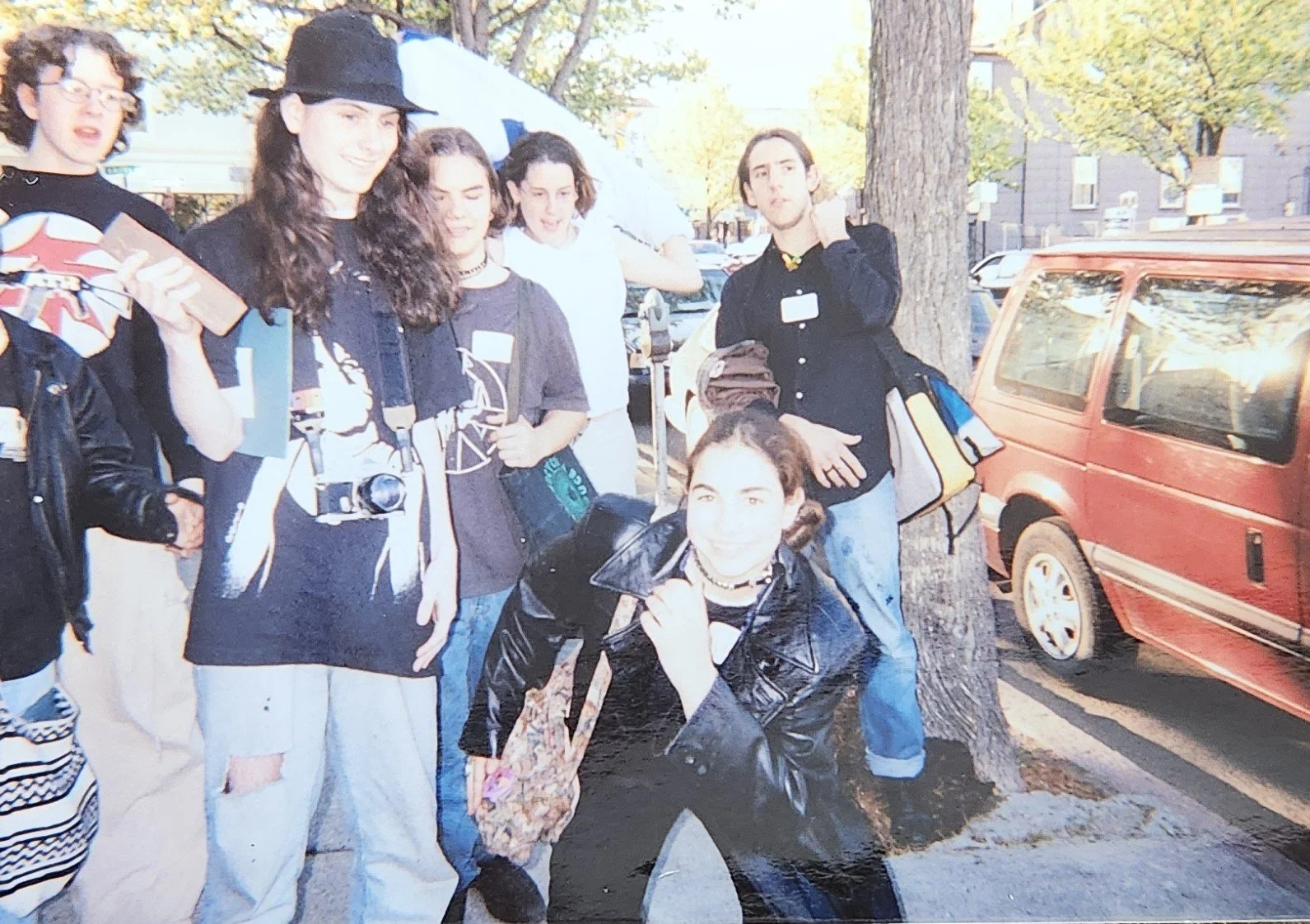
Members of CRLS’ Project 10 East posing together during a club activity, not dated (likely c. 1995-1999). Queer History Boston, Coll. 028 - Project 10 East, Photo Album 4.
Project 10 East at CRLS
While the after-school club was guided by a teacher, the students often decided how they wanted to spend their time and how to prioritize their goals. In a 1992 interview for the Boston Sunday Herald, members of Project 10 East described their work:
We meet once a week. We have a peer training program to train young high school students to go into classrooms to deal with homophobic incidents and help teachers and other young people talk about homophobia as a social issue. It’s important that all young people be involved in the process of dealing with homophobia, as all young people should be involved in dealing with racism and sexism.[3]
Beyond education, they also organized events that focused on celebration and affirmation of themselves and their peers. In 1995, for example, a group of students organized a photography project featuring other queer youth from around the country.
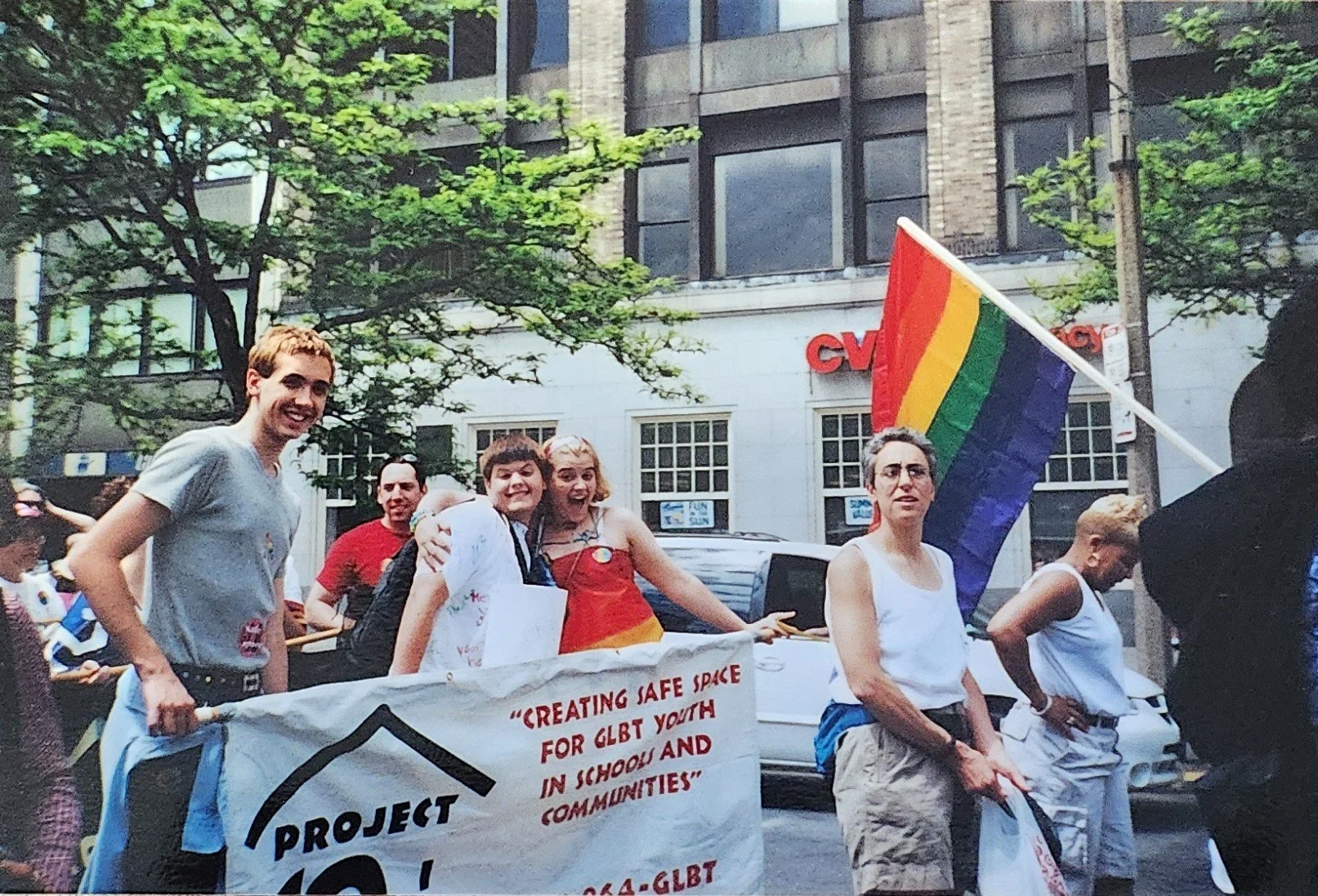
Project 10 East members march in a parade holding a Project 10 East banner and waving a rainbow flag, 2001. Queer History Boston, Coll. 028 - Project 10 East, Photo Album 4.
Spreading the Word - Creating GSAs at other New England Schools
Heading into their fourth year, Project 10 East was still the only LGBTQ+ support group in a public high school in New England. Al Ferreira founded a second organization with the same name, Project 10 East, Inc., to bring support to queer youth in other schools and who were unhoused.
The new organization created a curriculum to distribute to other students and teachers who were interested in forming a GSA at their schools. It discussed the steps to create a GSA, provided guidance for facing down challenges from school administrations or parents, and offered a detailed monthly curriculum with event ideas, themes, and other suggestions. In September, for example, the curriculum suggested holding a “welcome back” meeting with activities around defining LGBTQ terms, learning about historical and current LGBTQ people, and understanding different queer identities.

Medford High School GSA students gathered to celebrate, possibly during a pride march, not dated (c. 1996-1999). The Medford High GSA was created in 1996, modeled after Project 10 East. Queer History Boston, Coll. 028 - Project 10 East, Photo Album 4.
Check out this list of Queer Trivia included in the 2005 curriculum:
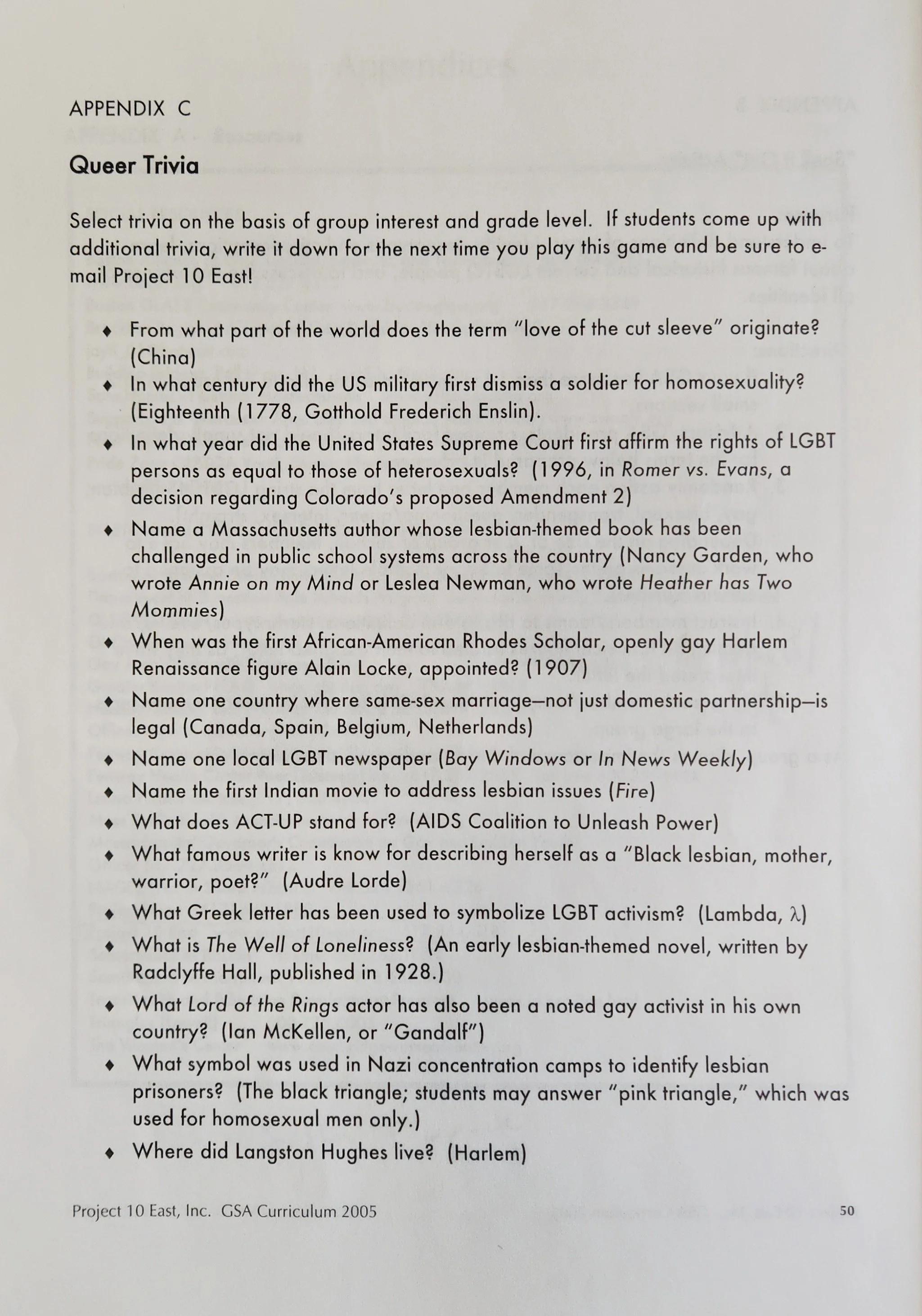
Appendix C, GSA Curriculum by Project 10 East, Inc. Created and published in 2005. The History Project, Coll. 028 - Project 10 East, Folder 47.
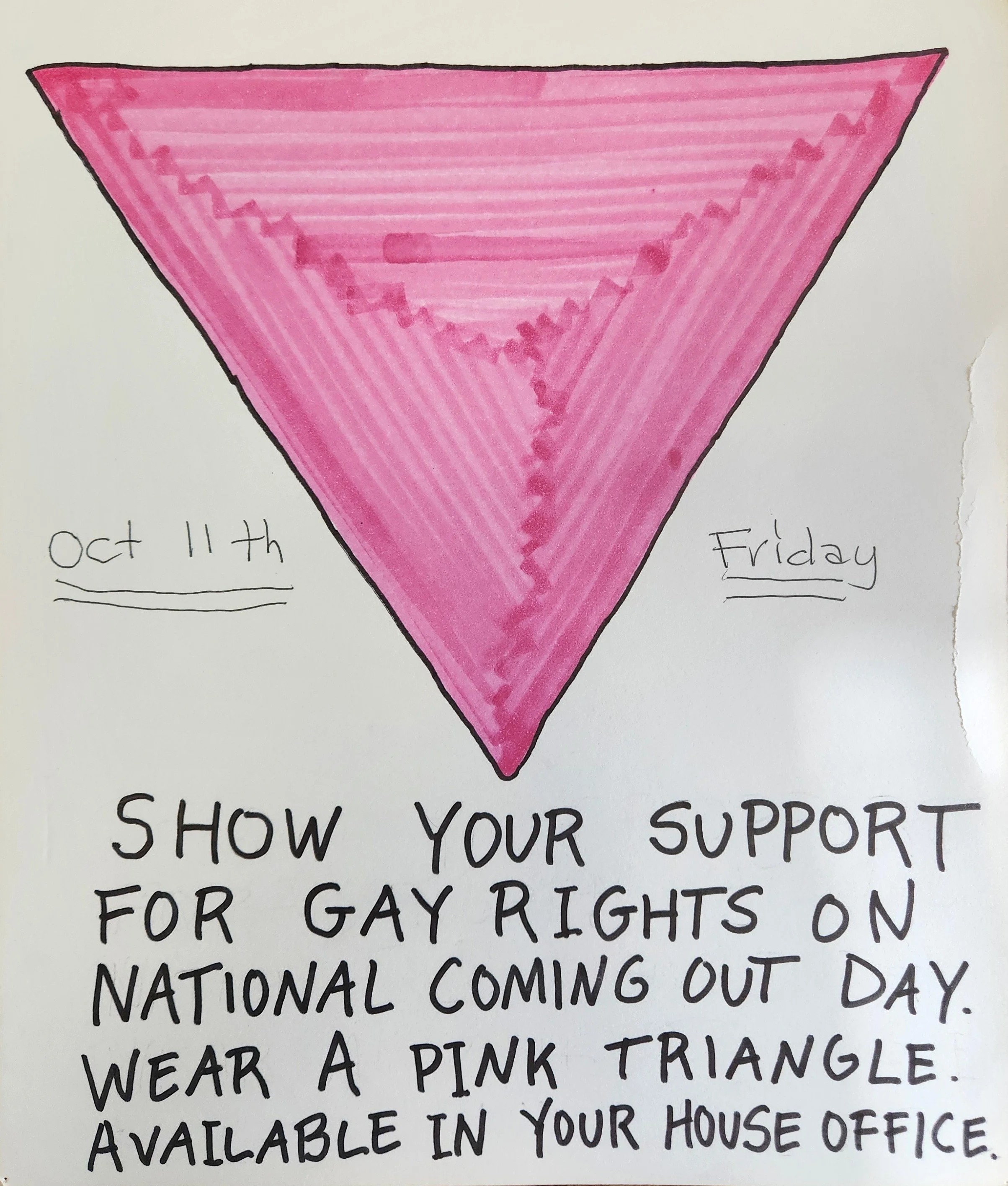
Poster for October 1995 Coming Out Day assembly encouraging students to wear a pink triangle in support of gay rights. The pink triangle is a reclaimed symbol that was once used to label gay men in Nazi concentration camps. Queer History Boston, Coll. 028 - Project 10 East, Folder 54.
Not Without Challengers
Perhaps unsurprisingly, Project 10 East and other school GSAs faced challenges from parents and school administrators who fought against the sex education GSAs provided, or who felt that the very existence of such a club was a threat. In 1995, two parents wrote an angry letter to the CRLS administration after their children attended the school’s fifth annual Coming Out Day assembly.[4] This gathering, like the others before it, featured speeches from city leadership, fellow students, alumni, and teachers. The parents who challenged the assembly were not successful in either ending the annual event or in blocking Project 10 East from continuing to host educational and celebratory events at CRLS.
On a national scale, the first lawsuit which defended students’ rights to form a Gay Straight Alliance was filed in 1998. The American Civil Liberties Union (ACLU) published a handout in 2015 documenting many of the successful cases they had litigated in support of students’ rights to organize.[5]
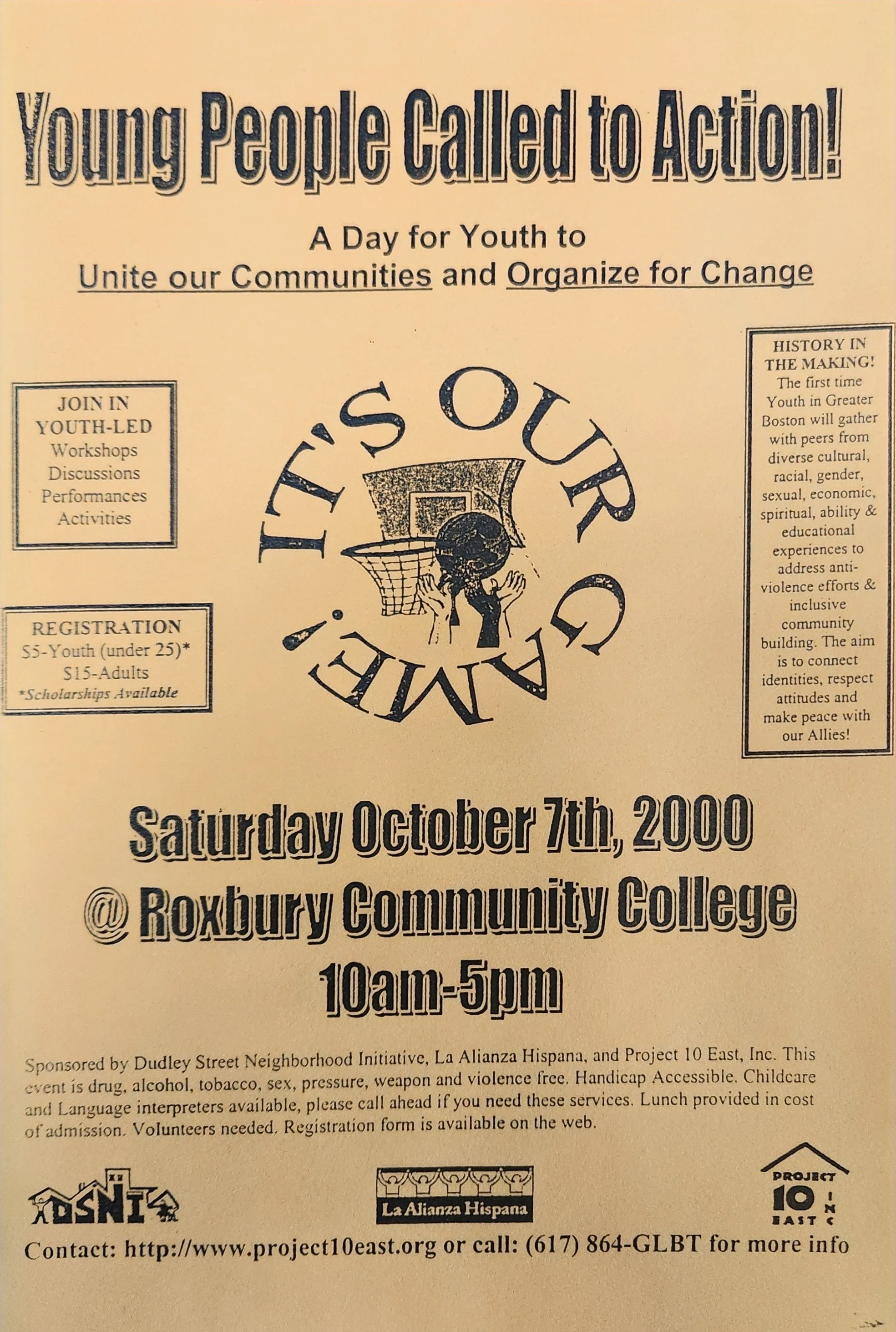
Project 10 East sponsored all kinds of youth-centered events. This flyer for a 2000 event, “Young People Called to Action” was about encouraging and empowering youth to advocate for social change. Queer History Boston, Coll. 028 - Project 10 East, Folder 60.
P10E Today
Project 10 East still exists at the Cambridge Rindge and Latin School. Their current mission:
P10 is a safe haven and support network for gay, lesbian, bisexual, transgender, questioning and straight supporters. P10 is a place to talk, have fun and provide a sense of belonging; a way to raise awareness of LGBTQ+ issues in the community; and a place to come and be YOU. All students at CRLS are welcome to join regardless of sexual orientation or gender identity.[6]
Meanwhile, other youth organizations, like BAGLY (Boston Alliance of LGBTQ+ Youth) and GLSEN (Gay, Lesbian, and Straight Educators’ Network) continue the work of creating affirming and safe spaces for queer youth, providing education for parents, teachers, and students alike, and advocating for students’ rights to safe and inclusive schools.
Citations
1 - Virginia Uribe, “Project 10: A School-Based Outreach to Gay and Lesbian Youth” The High School Journal 77, no. 1/2 (1993): 108–12. http://www.jstor.org/stable/40364636.
2 - “The Ferreira/Crowell/Donovan Family,” in Peggy Gillespie and Gigi Kaeser (eds.), Love Makes a Family: portraits of lesbian, gay, bisexual, and transgender parents and their families (University of Massachusetts Press, 1999). The interview with Al Ferreira and his family is included in the Project 10 Archives at The History Project. The full text is available via Internet Archive.
3 - Mary Hurley, “Straight talk for gay teenagers,” in Sunday People, September 20, 1992. The History Project, Coll 028 - Project 10 East.
4 - See The History Project, Coll. 028 - Project 10 East, Folder 51, “CRLS National Coming Out Day Controversy.”
5 - ACLU, “GSA Court Victories: A Quick Guide for GSAs” (2015).